
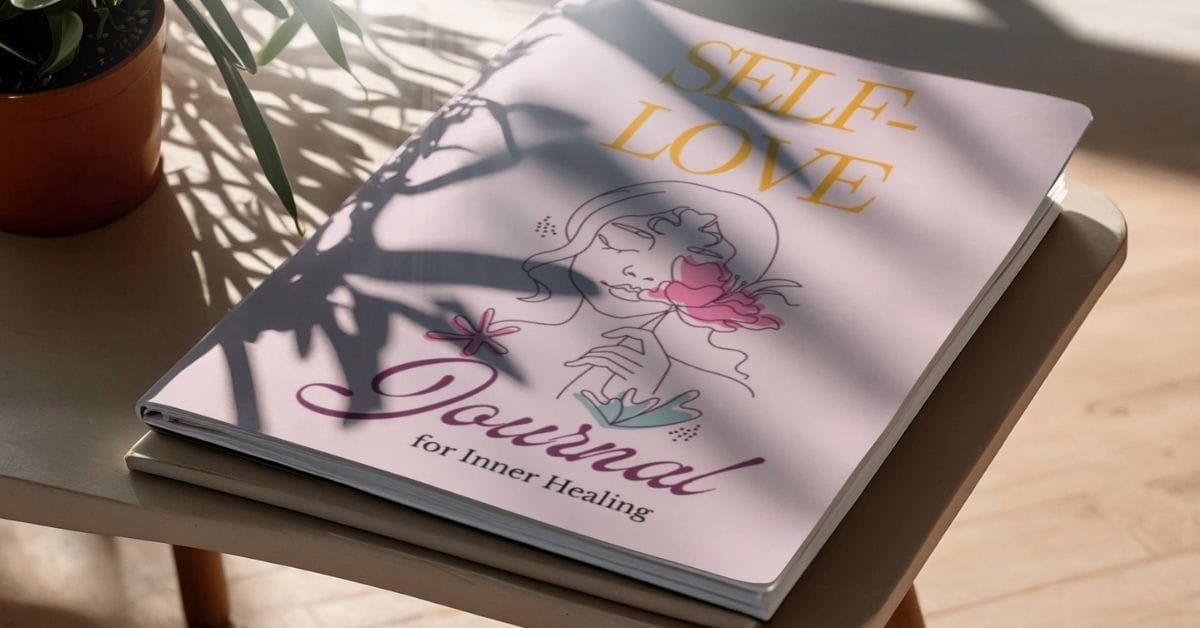
If someone tells you that self-love is a form of narcissism, they are deeply mistaken.
Self-love is the foundation of self-esteem.
When practiced consciously and consistently, it can lead to meaningful growth, emotional stability, and a stronger sense of personal worth. Far from being selfish, self-love journaling allows you to show up in your life with clarity, confidence, and balance.
For some people, self-love comes naturally. They intuitively know how to care for themselves and honor their needs. For others, it develops more slowly and requires patience, reflection, and gentle support. Both experiences are valid.
Self-love is not something you force. It is a practice that unfolds gradually, consciously, and intentionally. It becomes part of your life not through pressure, but through awareness. And most importantly, it should never feel like an obligation or a requirement.
For many people, self-love is a real need. A need that helps strengthen self-esteem, emotional resilience, and personal value.
If you feel disconnected from yourself, overly critical, or emotionally exhausted, this practice may be exactly what you need.
This post contains affiliate links, which means I may receive a small commission, at no cost to you, if you make a purchase through a link. Read the full disclosure here.
Why Self-Love Journaling Matters
At the center of everything in our lives is our relationship with ourselves.
The way we speak to ourselves, the way we respond to difficulty, and the way we care for our emotional needs shape every other area of life — from confidence and relationships to decision-making and inner peace.
When self-love is missing or neglected, it often shows up quietly. You may notice that you:
- Doubt yourself more than usual
- Talk yourself out of opportunities
- Feel emotionally drained or disconnected
- Fear criticism or judgment
- Struggle to trust your own choices
Self-love journaling offers a gentle way to bring awareness back to these patterns without judgment. It creates space to listen to yourself again — honestly and compassionately.
What Self-Love Journaling Looks Like in Real Life
Self-love journaling is not about forcing positivity or pretending everything is fine.
It is a practice of unconditional acceptance, compassion, and kindness toward yourself. It includes self-esteem, emotional support, and the willingness to prioritize your well-being.
Through journaling, you begin to observe your inner dialogue. You notice where self-criticism appears and where care is needed.
Over time, this awareness helps you soften your inner voice and respond to yourself with more understanding.
This practice does not require long entries or perfect words. Some days, a few honest sentences are enough. What matters is that the journaling feels supportive, not demanding.
Self-Love Is Not Narcissism
Self-love is often misunderstood.
Unlike narcissism, self-love is rooted in balance. It allows space for empathy, respect, and care for others without sacrificing your own integrity. It does not involve superiority or comparison.
Self-love does not mean seeing yourself as better than others. Instead, it shapes how you recognize your own value — which naturally helps others see it too.
At its core, self-love means treating yourself with the same level of kindness and understanding that you offer to others. It means accepting your imperfections without judgment and honoring your worth without conditions.
What Self-Love Journaling Changed for Me
Self-love journaling helped me reconnect with my inner strength, determination, and courage.
It allowed me to do the things I love without constantly fearing criticism or discouragement from others.
Through consistent self-love practices, I also found the courage to try new things without being afraid that failure would define my value. I learned that confidence does not come from never failing—it comes from trusting myself even when things don’t go as planned.
Confidence is an essential tool in every area of life. It allows us to create meaningful experiences, pursue what matters to us, and move forward with clarity instead of fear.
Why a Guided Self-Love Journal Makes a Difference
Many people start with random journal prompts. While these can be helpful, they are not always enough.
Unstructured prompts can feel overwhelming, especially when emotions are already heavy. They may push too deep too fast or lack emotional pacing.
A guided self-love journal offers something different:
- Structure without pressure
- Depth without overwhelm
- Reflection without judgment
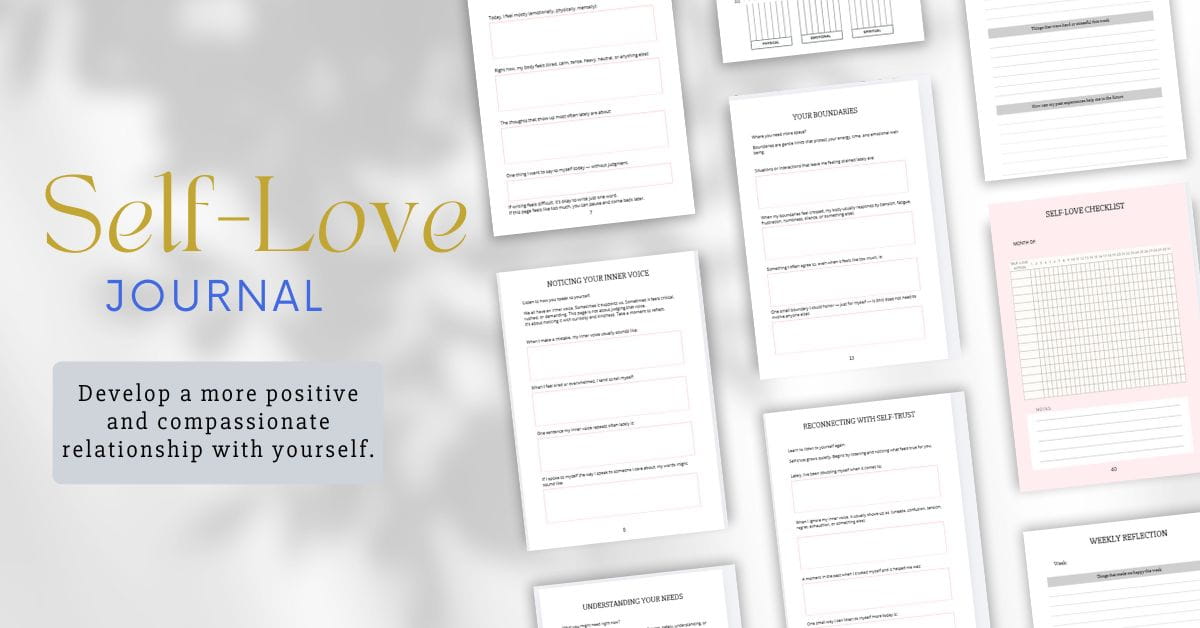
This is why I created the Self-Love Journal for Inner Healing — to be a supportive, grounding space you can return to whenever you need it.

What You’ll Find Inside the Journal
This journal is designed as a gentle companion, not a task list.
Inside, you’ll find:
Emotional Check-Ins
Simple prompts that help you notice how you feel — emotionally and mentally — without analyzing or fixing anything.
Self-Compassion Practices
Pages that guide you to soften self-criticism and develop a kinder inner dialogue.
Confidence and Self-Trust
Reflections that help you reconnect with your inner voice and trust your decisions again.
Boundaries, Needs, and Rest
Gentle questions that help you recognize what supports you and what drains you — without guilt.
Space to Reflect and Integrate
Open-ended pages that allow you to write freely, pause, or simply be present.
Self-love touches every area of life. This journal helps you explore those areas with patience and honesty.
How Often Should You Use a Self-Love Journal?
There is no correct schedule.
You can write daily, weekly, or only when you feel the need. You can revisit the same pages multiple times or skip sections entirely.
The journal is designed to support your rhythm — not control it. The more flexibility you allow yourself, the more meaningful the practice becomes.
A Quiet Way to Come Back to Yourself
Self-love is not something you achieve once and keep forever. It is a relationship — one that evolves as you do.
I created this self-love journal to be a powerful, grounding practice for you.
Not as a challenge.
Not as a daily obligation.
But as a gentle way to come back to yourself.
Related post: