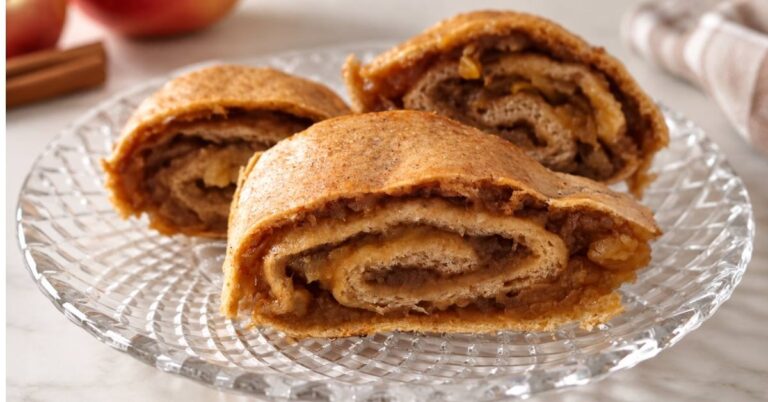

This easy pumpkin roll recipe is a wonderful way to turn fresh pumpkin into a homemade pastry with delicate layers and a lightly crisp, golden crust.
Made with a simple yeast dough, grated pumpkin, cinnamon, and vanilla sugar, it is a comforting addition to your collection of homemade pumpkin baked goods.
This pumpkin roll is also suitable for vegans. The dough contains no eggs, milk, or butter, and a simple soy milk and oil mixture gives the pastry a lovely finish before baking.
Unlike a classic pumpkin roll, which is usually a soft sponge cake filled with cream cheese, this recipe uses thinly rolled pastry wrapped around a lightly cooked pumpkin filling.
The result is a rustic, satisfying dessert that lets the flavor of the pumpkin shine.
This post contains affiliate links, which means I may receive a small commission, at no cost to you, if you make a purchase through a link. Read the full disclosure here.
Why You’ll Love This Pumpkin Roll Recipe
- Simple homemade ingredients: Flour, yeast, oil, pumpkin, and a few pantry staples form the basis of this traditional recipe.
- A vegan-friendly pastry: The dough is naturally dairy-free and egg-free, making it suitable for many plant-based and fasting menus.
- A lightly sweet filling: Cinnamon and vanilla sugar complement the pumpkin without overpowering its natural flavor.
- A make-ahead dough: Preparing the dough the evening before makes the next day’s baking easier.
- Versatile homemade pumpkin baked goods: You can adapt the same dough for apple or cheese fillings, depending on the season and your preferences.
Tips for the Best Homemade Pumpkin Roll
Choose a pumpkin with good flavor
Choose a sugar pumpkin or another sweet pumpkin variety commonly used for baking. These pumpkins have a naturally sweet flavor and smooth flesh that works well in homemade pumpkin desserts.
Remove excess moisture from the filling
This is one of the most important steps. A watery filling can soften the pastry layers and make the bottom of the roll difficult to bake properly.
Cook the grated pumpkin until it has softened and some of its moisture has evaporated. Let it cool before spreading it over the dough.
Keep the filling lightly sweetened
This traditional pumpkin roll recipe uses just a little sugar, cinnamon, and vanilla sugar. The modest sweetness allows the pumpkin to remain the main flavor.
If your pumpkin is naturally sweet, you may need very little additional sugar. If it is less sweet, adjust the filling to your taste.
Do not skip the overnight rest
The dough needs time to rest in the refrigerator. Preparing it in advance also makes this recipe more convenient when you want freshly baked pumpkin pastry the next day.
Let the rolls cool before cutting
Freshly baked pastry can be fragile, especially when the filling is still hot. Let the rolls rest before slicing to help them hold their shape.
Variations to Try
One of the appealing features of this homemade pumpkin roll is that the dough can be adapted to different fillings.
- Apple rolls: Use grated apples cooked until softened and thickened. Add cinnamon to complement their flavor.
- Plum rolls: Prepare a thick plum filling for a seasonal variation with a pleasant balance of sweet and tart flavors.
- Cheese rolls: Use a suitable savory or lightly sweetened cheese filling. For a fasting-friendly version, choose a plant-based alternative if desired.
- More aromatic pumpkin rolls: Add a little extra cinnamon or vanilla sugar to the filling without overwhelming the natural pumpkin flavor.
These variations make the recipe useful beyond autumn, when pumpkin is especially popular.
How to Store Pumpkin Rolls
Allow the baked rolls to cool completely before storing them.
- At room temperature: Keep them covered in a cool environment for up to one day, provided the filling and storage conditions make this appropriate.
- In the refrigerator: Store leftovers in an airtight container for approximately 3–4 days.
- In the freezer: Wrap individual portions well and freeze for up to 2–3 months for best quality.
Reheat individual slices in an oven at a moderate temperature until warmed through. This helps restore some of the pastry’s crispness. A microwave is convenient, but it tends to soften the crust.
Discard the rolls if they develop an unusual smell, visible mold, or other signs of spoilage.
Frequently Asked Questions
Why does the dough need to rest overnight?
The overnight rest allows the dough to relax and makes it easier to roll out. It also gives you the convenience of preparing the dough ahead of time and assembling the rolls the following day.
How do I prevent the pumpkin filling from making the pastry soggy?
Cook the grated pumpkin until excess moisture has evaporated, add the semolina to help thicken the filling, and allow it to cool before assembly. Use a moderate amount of filling rather than spreading it too thickly.
Can I prepare the pumpkin rolls ahead of time?
You can prepare the dough the evening before, as described in this recipe. The filling can also be cooked ahead and refrigerated once cooled. Assemble and bake the rolls when you are ready for freshly baked pastry.
Can I use canned pumpkin puree instead of fresh pumpkin?
Yes, but canned pumpkin puree has a softer texture than freshly grated pumpkin. Cook it briefly with the semolina to thicken the filling if needed, and let it cool before spreading it over the dough. Avoid pumpkin pie filling, which already contains sugar and spices.
Can I use instant yeast instead of active dry yeast?
Yes. Instant yeast can generally be substituted in the same quantity by weight, although it may work faster. Follow the instructions on your yeast packet and check that the dough is ready before rolling it out.
Can I make this recipe with whole wheat flour?
You can replace some of the all-purpose flour with whole wheat flour, but the pastry may turn out denser and less tender. Start by replacing about 20–25% of the flour, and add a little extra water if the dough feels too dry.
Can I add other spices to the pumpkin filling?
Yes. A pinch of ground ginger, nutmeg, or allspice can complement the pumpkin and cinnamon. Add small amounts so the spices don’t overpower the filling.
Can I make this pumpkin roll without semolina?
Yes. Semolina helps absorb some of the moisture in the pumpkin filling, but you can omit it if your cooked pumpkin is already thick and relatively dry. If the filling is watery, cook it longer to remove excess moisture before assembling the rolls.
A Traditional Pumpkin Pastry Worth Making at Home
This pumpkin roll recipe brings together a simple yeast dough, gently cooked pumpkin, and the comforting aroma of cinnamon.
Its overnight preparation makes it practical for home baking, while the egg-free and dairy-free ingredients make it a useful option for vegans.
If you enjoy seasonal pumpkin baked goods but prefer something different from the usual pumpkin cake or sweet bread, these homemade pumpkin rolls are worth adding to your autumn baking collection.
Serve them slightly warm or at room temperature with tea or coffee, and enjoy a traditional pastry made with simple ingredients and a little patience.

Easy Homemade Pumpkin Roll Recipe
Ingredients
For the dough
- 8 cups all-purpose flour 1 kg
- 1 cup sparkling mineral water 240 ml
- 1 packet active dry yeast about ¼ oz / 7 g, depending on the product
- 1 teaspoon salt
- 2 teaspoons sugar
- ¼ cup vegetable oil 60 ml
For the oil-and-flour paste
- ¼ cup vegetable oil 60 ml
- ½ cup all-purpose flour 60 g; spooned and leveled
For the pumpkin filling
- 5 cups of grated pumpkin 800 g–1 kg
- 2 teaspoons semolina
- ½ tsp cinnamon
- 1 tsp vanilla sugar
For brushing the pastry
- 3 tablespoon soy milk
- 2 teaspoons vegetable oil
Instructions
- Prepare the dough. Combine the flour, dry yeast, salt, and sugar in a large bowl. Add the sparkling mineral water and 60 ml of vegetable oil. Mix and knead until a cohesive, pliable dough forms. Add a little more water gradually if needed, as the flour should be fully incorporated without leaving the dough excessively dry.
- Make the paste. Mix 60 ml of vegetable oil with 60 g of flour in a separate bowl until smooth.
- Roll and fold. Roll the dough into a large sheet. Spread the oil-and-flour paste evenly over the surface, then fold the dough over itself several times to create layers.
- Rest the dough. Cover the dough and leave it at room temperature for approximately 1–2 hours, until it is relaxed and easier to roll out. Alternatively, refrigerate it overnight if you prefer to prepare it in advance.
- Prepare the pumpkin. Place the grated pumpkin in a pan over low to medium-low heat. Cook, stirring frequently, until softened and some of the excess moisture has evaporated.
- Thicken and season the filling. Stir in the semolina and cook briefly. Remove from the heat, add cinnamon and vanilla sugar to taste, and allow the filling to cool.
- Shape the rolls. Divide the dough into approximately three portions. Roll each portion into a thin rectangle. Spread the cooled pumpkin filling evenly over the dough, leaving a small border around the edges.
- Roll up. Fold the edges inward slightly and roll each sheet into a log. Place the rolls seam-side down on a baking tray lined with baking paper.
- Prepare the topping. Mix a little soy milk with 1–2 teaspoons of vegetable oil. Brush a thin layer over each roll.
- Bake. Bake in a preheated oven at 180°C (356°F) for approximately 40 minutes, or until the pastry is golden and cooked through.
- Cool and serve. Allow the pumpkin rolls to rest for 10–15 minutes before slicing.

Notes
Recipe Tips
- Cook the pumpkin until the filling is thick rather than watery to help prevent soggy pastry.
- Allow the filling to cool before spreading it over the dough.
- Keep the dough covered while resting to prevent the surface from drying out.
- Adjust the amount of pumpkin filling according to the size of your dough sheets.
- The soy milk and oil topping replaces the egg wash commonly used to brown pastry.