
Whenever I look at an empty journal, it feels like a fresh start.
But then I open to the first page… and suddenly I’m stuck.
What do I actually write?
What do I use this empty journal for?
How can it make my life easier instead of more chaotic?
If you’ve ever felt the same, you’re not alone. Many women buy a beautiful blank journal with lines and then freeze when it’s time to write something meaningful or useful.
Here’s the truth:
Your journal doesn’t need to be poetic, deep, or emotional. It can be practical. It can help you stay organized, think more clearly, and feel less overwhelmed.
In this guide, I’m sharing simple, everyday ideas for what to use an empty journal for—especially if you want more calm, clarity, and order in your life.
These ideas work whether you’re new to journaling or starting fresh with a brand-new notebook.
Why Practical Journaling Works So Well
We all carry too much in our heads:
- tasks
- reminders
- plans
- worries
- ideas
- appointments
- random thoughts from 2 a.m.
When everything stays in your mind, it becomes heavy and exhausting.
Writing things down gives your brain a place to rest.
Once it’s on paper:
- your mind feels lighter
- your day looks clearer
- tasks stop feeling chaotic
- you feel more grounded and in control
Practical journaling isn’t about perfect handwriting or deep reflections. It’s about making space in your mind so you can think and live with more calm.
Let’s look at some simple ways to use that empty notebook you’ve been saving.
A journal lets you put the clutter somewhere safe so you don’t have to carry it.
Whether you have a brand-new notebook, a half-used one, or a simple blank journal with lines, there are so many simple, helpful ways to fill it. And once you get started, it becomes one of the easiest habits to keep.
Practical, Everyday Ideas for What to Use an Empty Journal For
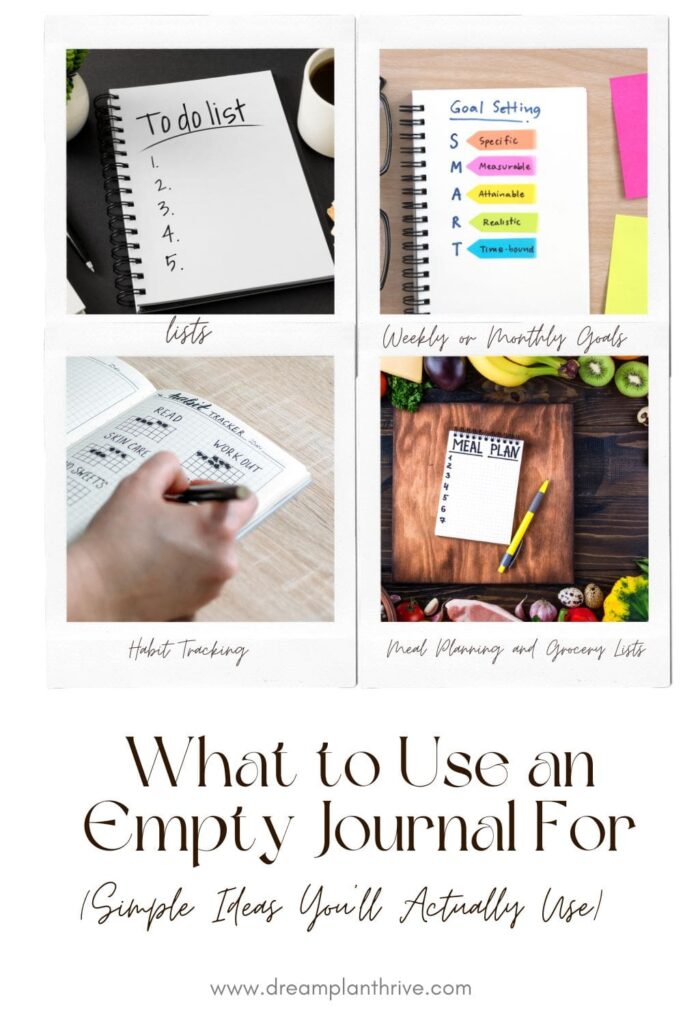
1. Daily To-Do Lists That Keep You Focused
A simple to-do list is one of the easiest—and most effective—ways to use your journal. Instead of keeping tasks scattered on your phone, your brain, and random sticky notes, gather everything in one place.
Create a structure that works for you. A simple format is:
- Top 3 priorities
- Secondary tasks
- Things to postpone or delegate
This helps you see what truly needs attention and what can wait.
Why this works:
- It reduces overwhelm
- It keeps your day clean and manageable
- It helps you focus on what matters most
Even writing just three important tasks a day can completely change the way you feel.
2. Weekly or Monthly Goals
Goals don’t have to be big. They can be simple, realistic, and personal. In your journal, try breaking them down into categories:
- Personal
- Home
- Work
- Health
- Mindset
- Relationships
Write your goals at the start of each week or month. Then go back at the end and note what you completed, what shifted, and what you want to adjust next time.
This type of journaling keeps you grounded and intentional, without putting pressure on yourself.
3. Habit Tracking for a Calm, Balanced Routine
If you want to stick to healthy habits, tracking them in your journal makes it easier.
Some habits you might track:
- Water intake
- Steps or movement
- Sleep
- Reading time
- Meditation or quiet moments
- No-spend days
- Homemaking tasks
- Screen-free time
- Evening routine completion
You can draw a simple table or color in boxes — whatever feels easy. Tracking habits brings awareness, and awareness leads to natural change.
4. Meal Planning and Grocery Lists
If your days feel busy or chaotic, meal planning in your journal can save time, money, and stress.
Use your journal to plan:
- Weekly meals
- Lunch ideas
- Pantry staples to restock
- A simple grocery list
- Foods to prep ahead
This reduces decision fatigue and helps you eat in a way that supports your energy.
5. A Daily Log of What Actually Happened
A daily log is one of the easiest journaling methods because it only takes a few minutes.
Write down:
- What you did today
- What went well
- What you completed
- What you need to remember
It’s not about emotion. It’s about clarity.
Over time, you start to notice patterns — what energizes you, what drains you, and where your days tend to go.
This type of journaling makes your life feel more intentional and aligned.
6. A Brain Dump Page for Mental Clarity
Anytime your mind feels full, open a blank page and write everything on it:
- Thoughts
- Worries
- Tasks
- Reminders
- To-dos
- Ideas
- Conversations you need to have
- Things you don’t want to forget
- Things you need to buy
Don’t organize it. Don’t judge it. Don’t make it pretty.
A brain dump is simply a release.
This is one of the most powerful ways to immediately reduce overwhelm and restore a sense of calm.
7. Ideas, Creativity and Brainstorms
Life gets busy. Inspiration comes and goes. Your journal is the perfect place to keep track of ideas so they don’t disappear.
You can write:
- Business ideas
- Hobby ideas
- Reading lists
- Home projects
- DIY ideas
- Content ideas
- Gift ideas
- Things you want to try
This type of journaling keeps your creativity alive.
8. Organizing Home Tasks and Routines
Your journal is a great place to map out routines that support a peaceful home environment.
You can use it to write:
- A weekly cleaning routine
- Decluttering lists
- Items that need replacing
- Home areas that need attention
- Seasonal tasks
This keeps your home running smoothly without feeling like you’re carrying everything in your head.
9. Budgeting and Money Notes
Money can be a major source of stress for many women. A journal can help you stay organized and calm around your finances without complicated spreadsheets.
Write:
- Daily spending
- Monthly expenses
- Savings goals
- Subscription list
- Bills due this month
- Unexpected expenses
Seeing these things on paper gives you more clarity and confidence.
10. Planning Out Your Day
If you like structure, you can use your journal as a simple daily planner.
Divide your day into:
- Morning
- Afternoon
- Evening
Then write the tasks or activities for each.
This helps you stay centered and prevents your day from feeling scattered.
11. Tracking Health and Lifestyle Patterns
Journaling is also helpful for noticing patterns in how you feel physically and mentally.
Some things you can track:
- Sleep quality
- Energy levels
- Foods you ate
- Water intake
- Movement
- Stress levels
- Symptoms you notice
- Changes in your routine
These notes help you care for yourself with more understanding and awareness.
12. Notes From Books, Courses, or Lessons
If you’re learning something new, use your journal to collect:
- Key takeaways
- Helpful quotes
- Steps you want to apply
- Tips you want to remember
This keeps your knowledge organized and easy to revisit.
13. Important Dates & Reminders
Your journal is a safe place to keep track of:
- Birthdays
- Appointments
- Renewals
- Events
- Seasonal planning
- Travel dates
- Deadlines
Keeping everything in one place helps reduce mental load.
14. Simple Routines to Support Your Well-Being
If you want more ease and calm in your days, try building small routines in your journal:
- A gentle morning routine
- A peaceful nighttime routine
- A Sunday reset ritual
- A weekly planning routine
- A self-care checklist
These routines help stabilize your mood and bring more balance to your daily life.

Once one habit is steady, add another. Build slowly. Keep it simple. Use plain headings.
Make lists.
Keep a separate color or page for long-term ideas. That way they don’t mix with daily tasks.
If you want structure, draw a simple template at the top of the page. Reuse it. Templates save time.
Don’t aim for perfect pages. Aim for useful pages.
Your journal is a tool to help you breathe and think more clearly.
You don’t need fancy pens or a color system. You need a few minutes and a page you can trust.
Pick one practical thing to write today. Keep it simple. Let the journal do the work of holding what’s in your head.
The first page doesn’t need to be perfect. It just needs to be yours.
Read more on journaling: