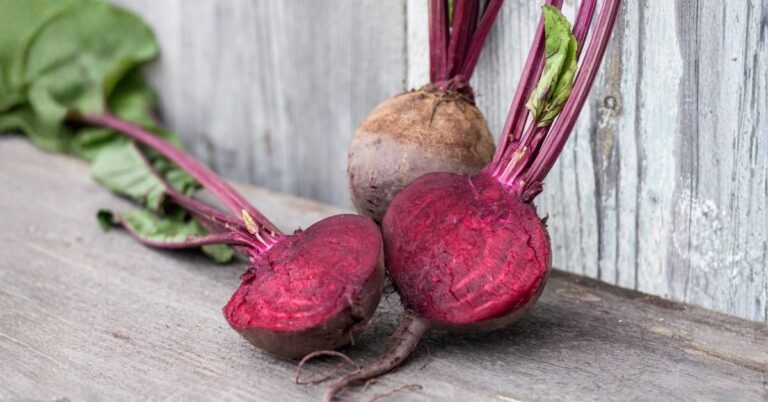

If you love the earthy sweetness of beets, this easy pickled beets recipe is a wonderful way to enjoy them with a little extra flavor.
The beets are first roasted until tender, then sliced and packed into jars with garlic, ginger and aromatic caraway seeds.
The result is a simple combination of sweet, earthy beetroot, tangy vinegar and warm spices.
These easy pickled beets are lovely served alongside salads, potatoes, grains, sandwiches or simple winter meals.
And there is something especially satisfying about preparing jars of beets at the end of the season and having them ready to enjoy later.
This post contains affiliate links, which means I may receive a small commission, at no cost to you, if you make a purchase through a link. Read the full disclosure here.
What Makes These Pickled Beets Special?
Many pickled beet recipes begin with boiled beets. For this recipe, I prefer to roast the beets first.
Roasting concentrates their natural sweetness and gives them a deeper, richer flavor. After roasting, the beets are peeled, sliced and placed into jars before being covered with a warm pickling liquid.
The brine contains water, salt, sugar, vinegar and plenty of caraway seeds, with garlic and ginger added directly to the jars.
The caraway is particularly delicious with the earthy sweetness of the beets.
Ingredients for Pickled Beets
For this pickled beets recipe, you will need:
- 1,200 g beetroot
- 800 ml water
- 25–30 g caraway seeds
- 15 g pickling or kosher salt
- 30 g sugar
- 80 ml plain vinegar
- Garlic, to taste
- Fresh ginger, to taste
I originally used 10 g of caraway seeds, but I now prefer 25–30 g because I enjoy the stronger flavor.
If you don’t like caraway, you can simply leave it out.
How to Pickle Beets
If you have never made homemade pickled beets before, the process is quite straightforward.
The recipe has three main stages:
- Roast the beets.
- Prepare the pickling liquid.
- Pack the beets into jars and cover them with the brine.
Here’s how to pickle beets using this method.
1. Roast the Beets
Preheat your oven to 180°C (350°F).
Wash the beets thoroughly.
Before putting them in the oven, prick each beet several times with a knife. This helps the heat penetrate the center, particularly when using larger beets.
Roast the beets for approximately 50 minutes at 180°C.
The exact cooking time can vary depending on the size of your beets, so check them with a knife. They should be tender enough to pierce easily.
2. Let the Beets Cool
Remove the roasted beets from the oven and allow them to cool until they are comfortable enough to handle.
Then peel them.
This is the moment when I strongly recommend using gloves.
Beet juice has an intense natural color and can stain your hands for days. Gloves make peeling and preparing the beets much easier.
3. Slice or Cut the Beets
Once the beets are peeled, you can prepare them however you like.
For these easy pickled beets, you can:
- Slice them thinly.
- Cut them into cubes.
- Cut them into thicker slices.
- Grate them using a mandoline or suitable grater.
There isn’t one correct shape.
I usually slice them, but grated or cubed beets work beautifully too.
4. Fill the Jars
Place the prepared beets into clean jars.
Add garlic and fresh ginger between the layers.
Don’t worry about making every jar look perfect. The important thing is to leave enough room for the pickling liquid to surround the beets.
5. Prepare the Pickling Liquid
Now it’s time to prepare the flavorful brine.
Add the following to a large pot:
- 800 ml water
- 25–30 g caraway seeds
- 15 g salt
- 30 g sugar
Bring the mixture to a boil and cook for approximately 5 minutes.
Turn off the heat and allow the liquid to cool for a few minutes.
Then add the 80 ml of vinegar.
The vinegar provides the characteristic tangy flavor of these pickled beets.
6. Add the Brine to the Beets
Carefully pour the warm pickling liquid into the jars.
Make sure the beets are well covered by the liquid.
Close the jars immediately.
I then gently shake the jars to help release trapped air bubbles. If the beets settle and the liquid level drops, add more brine as needed.
The goal is to keep the beet pieces covered by the pickling liquid.
7. Allow the Jars to Cool
Once the jars are closed, wrap them in thick cloths or a blanket and leave them undisturbed until the following day.
This was the traditional method I followed when making these jars, allowing them to cool gradually.
After they have cooled, move them to the refrigerator.
How Long Do Pickled Beets Take?
The flavors become more developed as the beets sit in the pickling liquid.
For this recipe, I like to give the beets several weeks for the flavors to develop for 4–6 weeks.
Ways to Serve Easy Pickled Beets
One of the best things about homemade pickled beets is how versatile they are.
You can serve them as a simple side dish with:
- Roasted potatoes
- Grain bowls
- Green salads
- Lentils
- Beans
- Sandwiches
- Eggs
- Cheese
- Roasted vegetables
- Simple winter lunches
They also make a beautiful addition to a salad because of their naturally vibrant color.
You only need a few slices to add plenty of flavor and color to an otherwise simple meal.
Can You Grate Pickled Beets?
Yes.
You don’t have to slice your beets if you prefer a finer texture.
For this pickled beets recipe, you can grate the roasted beets using a mandoline or suitable grater before adding them to the jars.
You can also cut them into cubes or thicker slices.
The choice is completely yours.
Can You Leave Out the Caraway?
Absolutely.
If you don’t enjoy caraway seeds, leave them out.
The garlic, ginger, vinegar and roasted beets still create a flavorful combination.
However, I recommend trying the recipe with caraway at least once.
The combination of roasted beets and caraway is one of my favorite parts of these easy pickled beets.
Tips for Making Pickled Beets
Wear gloves
Beetroot stains very easily. Wearing gloves when peeling and slicing will save you from having red-purple fingers for the next few days.
Roast rather than boil
Roasting gives the beets a deeper, sweeter flavor and is a lovely alternative to boiling.
Check the beets for tenderness
The 50-minute roasting time worked for my beets, but larger roots may need more time.
Choose your preferred beet shape
Slices, cubes and grated beets can all be used.
Keep the beets covered
When filling the jars, make sure the pickling liquid covers the beets.
Refrigerate this recipe
Because this recipe has not been scientifically tested as a shelf-stable canning formula, refrigerate the finished jars rather than treating them as pantry-stable preserves.
Frequently Asked Questions
Are pickled beets fermented?
Not necessarily.
Traditional fermented beets develop their acidity through fermentation, while vinegar pickles use vinegar to create their characteristic acidic environment.
Because this recipe uses vinegar as part of the pickling liquid, I would describe it as pickled beets, rather than fermented beetroot sauerkraut.
Can I use different types of vinegar?
The acidity of vinegar matters when preparing pickled foods. For this recipe, I use 9% acidity vinegar.
If you are preparing a shelf-stable canned pickle, don’t substitute vinegars or change the proportions of vinegar, water or vegetables in a tested recipe. Follow the tested recipe exactly.
Can I use fresh garlic and ginger?
Yes. Fresh garlic and ginger are what I use in this recipe, and they add a lovely savory and warming flavor to the beets.
Why I Love This Easy Pickled Beets Recipe
I love how simple these pickled beets are. The roasted beets are naturally sweet and earthy, the vinegar adds just the right amount of tang, and the caraway brings a lovely warm, aromatic flavor.
You only need a handful of simple ingredients to make them: beets, water, vinegar, salt, sugar, caraway seeds, garlic, and ginger.
If you have fresh beets on hand, this is a wonderful way to prepare them and have something delicious ready to serve with all kinds of meals. They add beautiful color and plenty of flavor to a simple salad, a plate of roasted potatoes, or a cozy winter lunch.
And if you’ve never tried an pickled beets recipe with caraway before, I hope you’ll give them a try. The combination may surprise you!

Easy Pickled Beets Recipe with Caraway, Garlic and Ginger
Ingredients
- 1,200 g beets
- 800 ml water
- 25 30 g caraway seeds
- 15 g salt
- 30 g sugar
- 80 ml vinegar
- Garlic to taste
- Fresh ginger to taste
Instructions
- Roast the beetroot at 180°C for approximately 50 minutes, or until tender.
- Allow the beetroot to cool, then peel it while wearing gloves.
- Slice, cube, or grate the beetroot according to preference.
- Place the beetroot into clean jars and add garlic and ginger.
- Add the water, vinegar, caraway seeds, salt, and sugar to a large pot. Bring to a boil and simmer for 5 minutes.
- Remove from the heat and allow the liquid to cool slightly.
- Pour the warm pickling liquid over the beetroot, making sure the beetroot is covered.
- Gently shake the jars to release trapped air. Add more brine if necessary.
- Immediately close the jars with their lids and check each jar to make sure there are no leaks.
- Wrap the jars in thick cloths or a blanket and leave them undisturbed until the following day, allowing them to cool slowly.
- The next day, I move the jars to the pantry and let the beets pickle for about 4–6 weeks. By winter, we’ll have delicious homemade beetroot waiting in the jars—a little taste of summer preserved for the colder months, with a gentle tang of vinegar and the lovely flavor of caraway.